

12:39PM, May 14, 2026
Two-year research deal seeks U.S. supply from refining waste
Adding a university-led research effort to its broader push to secure domestic supplies of high-priority tech metals, U.S. Critical Materials Corp. announced April 16 that it has signed a two-year sponsored research agreement with Columbia University focused on recovering gallium, scandium, titanium, and rare earth elements from red mud, a major byproduct of aluminum refining.
Long centered on advancing its high-grade Sheep Creek rare earths-gallium project in southwestern Montana, U.S. Critical Materials has been positioning itself around both mineral discovery and processing pathways that could help loosen America’s dependence on foreign sources of metals essential to defense systems, advanced manufacturing, and other high-tech applications.
That broader effort has taken on added urgency as the United States remains fully import-dependent for gallium and scandium, two materials the company says are essential to secure communications, advanced semiconductors, directed-energy systems, hypersonics, and next-generation aerospace platforms.
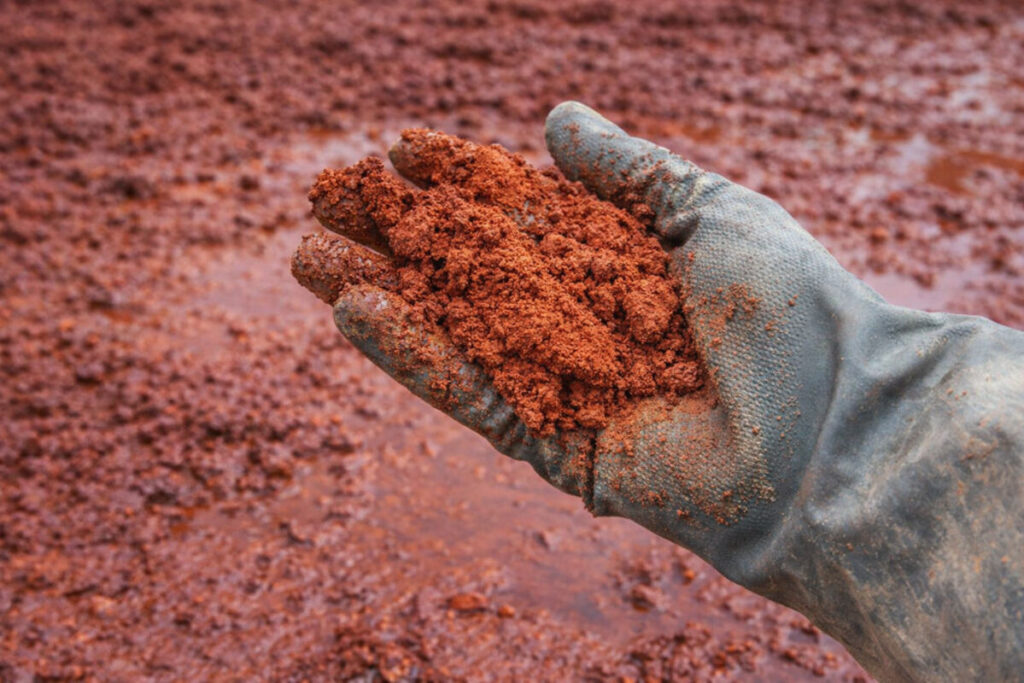
Under the new agreement, the partners will investigate scientific pathways for extracting those defense-critical metals from red mud, an industrial waste stream produced during aluminum refining that contains elevated concentrations of gallium, scandium, titanium, and rare earth elements.
Dubbed “Mud To Metal,” the program will be led by Greeshma Gadikota, a professor at Columbia and director of the Lenfest Center for Sustainable Energy.
“Our team is focused on rigorous, environmentally responsible pathways for recovering critical metals from complex materials,” said Gadikota. “Red mud presents a significant opportunity to strengthen U.S. resource security through innovation.”
According to the agreement, work under the program will include a range of scientific and engineering studies aimed at understanding the material, developing ways to extract the target metals, and evaluating how the process could work on a larger scale, such as mineralogical characterization, ambient-temperature oxidative leaching, selective separations, co-recovery of titanium dioxide and iron oxide, and techno-economic and life-cycle modeling.
Consistent with those research goals, U.S. Critical Materials and Columbia will examine red mud from multiple locations for characterization and process-development work as they evaluate how broadly the recovery approach could apply across different feed materials.
“Gallium and scandium are strategic choke points for the U.S. defense and aerospace industrial base,” said Harvey Kaye, executive chairman of US Critical Materials. “This agreement with Columbia positions us to build the scientific foundation for a future domestic supply.”
Broadening a strategy that until now has been more closely tied to mineral exploration and early-stage process development around Sheep Creek, the Columbia partnership adds a new research track alongside work U.S. Critical Materials has already been advancing with Idaho National Laboratory and other strategic partners.
By adding red mud to that broader effort, the company is extending its domestic supply strategy beyond mine development alone and into research aimed at unlocking a second potential source of defense-critical metals from industrial waste.